


Introduction
The semiconductor manufacturing industry continues to evolve rapidly, with increasing demand for automation, real-time monitoring, and seamless equipment connectivity. Modern fabrication facilities rely heavily on advanced communication standards to ensure smooth data exchange between production equipment and host systems such as Manufacturing Execution Systems (MES). However, many fabs and OSAT facilities still operate older tools that were designed long before modern automation standards became widespread. This creates significant hurdles when attempting Legacy equipment SECS/GEM integration, which is often essential for maintaining competitiveness in today’s highly automated manufacturing environment.
Companies pursuing semiconductor equipment modernization frequently encounter technical and operational barriers when integrating older machines into modern factory networks. These systems were typically built without standardized communication protocols, making the transition to automated environments complex and resource-intensive. As fabs attempt to connect outdated machines to modern host systems, they face multiple SECS/GEM integration challenges that require specialized engineering knowledge, retrofit technologies, and strategic planning.
This blog explores the most common obstacles encountered while integrating legacy semiconductor equipment with modern host systems and provides insight into how manufacturers can overcome these semiconductor equipment automation challenges.
Understanding the Need for Legacy Equipment Integration
Despite the rapid introduction of new tools, many semiconductor manufacturers continue to rely on older equipment due to high capital costs and long operational lifecycles. These machines still deliver reliable production results but often lack built-in automation interfaces required for modern manufacturing.
Implementing Legacy equipment SECS/GEM integration allows fabs to extend the lifespan of these valuable assets while enabling communication with centralized host systems. By connecting legacy tools through SECS/GEM host integration, manufacturers can achieve improved process control, better equipment monitoring, and enhanced production efficiency.
However, upgrading older systems introduces various SECS/GEM implementation challenges because legacy equipment often lacks standardized communication hardware, compatible software architecture, or accessible data structures. These limitations create substantial barriers during semiconductor equipment modernization initiatives.
Hardware Limitations in Older Equipment
One of the most significant obstacles in Legacy equipment SECS/GEM integration is the absence of proper communication hardware. Many legacy semiconductor tools were designed with proprietary control systems and limited digital connectivity. These machines often rely on outdated communication ports, analog signals, or custom control interfaces.
During SECS/GEM retrofit solutions, engineers frequently need to install additional hardware modules, gateway devices, or interface controllers to enable communication between legacy equipment and modern host systems. These hardware modifications can be technically complex, particularly when documentation for older machines is limited or unavailable.
Additionally, semiconductor equipment automation challenges arise when attempting to capture real-time operational data from older sensors or control units. Without proper signal mapping and hardware interfacing, achieving reliable data acquisition becomes difficult, increasing project complexity during SECS/GEM host integration.
Software and Protocol Compatibility Issues
Another major barrier in Legacy equipment SECS/GEM integration involves software compatibility. Older tools often run proprietary or outdated software that does not support modern communication standards. Integrating these systems requires developing custom middleware, protocol translators, or firmware modifications.
These compatibility challenges frequently lead to SECS/GEM communication issues, such as inconsistent data formatting, incomplete message handling, or unstable host connectivity. Successfully integrating legacy semiconductor equipment requires ensuring that the equipment can support essential SECS/GEM functions, including event reporting, alarm management, and variable data collection.
Furthermore, addressing SECS/GEM integration challenges involves implementing proper state models, communication timing, and host control commands. Without thorough testing and validation, integration efforts may result in unreliable communication, data loss, or production delays, ultimately affecting semiconductor equipment automation performance.
Data Mapping and Standardization Challenges
Effective Legacy equipment SECS/GEM integration requires accurate mapping of equipment variables, process parameters, and event triggers to standardized SECS/GEM data structures. However, legacy tools often use inconsistent naming conventions, undocumented parameters, or proprietary data formats.
These inconsistencies create significant difficulties when performing SECS/GEM host integration because host systems rely on standardized data definitions to monitor and control equipment operations. Engineers must carefully analyze legacy control logic to ensure proper data mapping and event generation during SECS/GEM retrofit solutions.
Data mapping challenges also contribute to broader semiconductor equipment automation challenges, as incorrect parameter interpretation can lead to inaccurate monitoring, false alarms, or incomplete production data. Addressing these SECS/GEM implementation challenges requires a deep understanding of both equipment operation and communication protocol requirements.
Operational Downtime and Production Risks
One of the most critical concerns during Legacy equipment SECS/GEM integration is minimizing production downtime. Semiconductor manufacturing environments operate under strict production schedules, and any integration work must be carefully planned to avoid operational disruptions.
During Semiconductor equipment modernization, integrating legacy tools often requires temporary shutdowns, system testing, and validation procedures. These activities introduce risks related to production delays, equipment instability, or unexpected integration failures.
Managing these semiconductor equipment automation challenges requires detailed planning, phased deployment strategies, and thorough system testing. Implementing effective SECS/GEM retrofit solutions helps reduce integration risks while ensuring reliable communication between equipment and host systems.
Skill and Resource Constraints
Another common issue in Legacy equipment SECS/GEM integration is the shortage of specialized expertise required to perform successful integrations. SECS/GEM communication protocols, equipment automation logic, and legacy control system architectures require highly specialized engineering skills.
Many organizations face difficulties finding professionals capable of handling both legacy tool automation and semiconductor requirements and modern host communication systems. Without experienced integration partners, companies often struggle to overcome SECS/GEM integration challenges and achieve seamless connectivity.
Partnering with experienced automation solution providers can significantly simplify the integration of legacy semiconductor equipment while reducing development time and implementation risks.
Security and Compliance Concerns
As semiconductor factories adopt modern automation technologies, cybersecurity and regulatory compliance become critical considerations. Implementing Legacy equipment SECS/GEM integration introduces potential security vulnerabilities because older machines were not designed with modern cybersecurity protocols.
During SECS/GEM host integration, legacy equipment must be secured against unauthorized access, data breaches, and communication interference. Addressing these SECS/GEM communication issues requires implementing network security layers, encrypted communication channels, and secure authentication mechanisms.
Ensuring compliance with industry standards during semiconductor equipment modernization is essential for maintaining production reliability and protecting sensitive manufacturing data.
Strategies to Overcome Integration Challenges
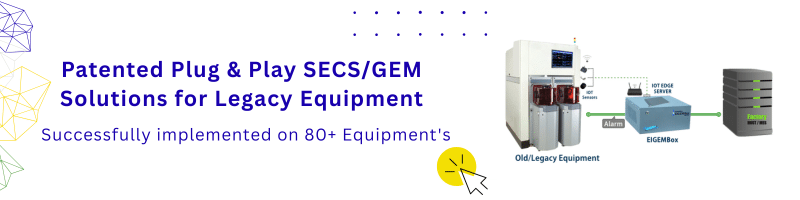
Successfully achieving Legacy equipment SECS/GEM integration requires a structured and strategic approach. Companies should begin with comprehensive equipment assessments to identify hardware limitations, software compatibility gaps, and communication requirements.
Implementing scalable SECS/GEM retrofit solutions allows manufacturers to gradually modernize legacy tools while maintaining production continuity. Utilizing modular integration architectures also simplifies future equipment upgrades and host system expansions.
Additionally, collaborating with experienced automation partners helps address complex SECS/GEM implementation challenges while ensuring compliance with industry standards. Continuous monitoring and performance validation further support successful semiconductor equipment automation.
Conclusion
As semiconductor manufacturing continues to advance toward fully automated and data-driven production environments, the importance of Legacy equipment SECS/GEM integration continues to grow. While older tools remain valuable production assets, their lack of modern communication capabilities creates significant barriers during semiconductor equipment modernization initiatives.
Manufacturers attempting to integrate legacy semiconductor equipment must overcome multiple technical and operational challenges, including hardware limitations, software compatibility issues, data standardization difficulties, and production risks. Addressing these SECS/GEM integration challenges requires careful planning, specialized engineering expertise, and advanced retrofit technologies.
By implementing reliable SECS/GEM retrofit solutions and focusing on seamless SECS/GEM host integration, semiconductor manufacturers can extend equipment lifespan, improve operational efficiency, and enable real-time production monitoring. Successfully overcoming semiconductor equipment automation challenges not only enhances manufacturing performance but also positions companies for long-term success in an increasingly digital and automated semiconductor industry.
Ultimately, investing in Legacy equipment SECS/GEM integration enables manufacturers to bridge the gap between traditional production systems and modern smart factory environments, ensuring sustainable growth and improved operational excellence.
