

Introduction
The semiconductor manufacturing industry relies heavily on automation, connectivity, and real-time data exchange to maintain high productivity and yield. The SECS/GEM Communication Protocol has become the global standard for enabling communication between manufacturing equipment and host systems such as MES, SCADA, and factory automation platforms. However, many fabrication plants and assembly facilities still operate older machines that lack native SECS/GEM capabilities. These legacy tools create significant barriers to automation, monitoring, and data-driven decision-making.
Implementing SECS/GEM on Non-GEM Tools has become essential for semiconductor manufacturers looking to remain competitive in the era of smart manufacturing and Industry 4.0. Organizations are increasingly focusing on ways to Enable SECS/GEM on Legacy Equipment to improve production visibility and integrate older machines into modern automation ecosystems. Through effective SECS/GEM Integration for Legacy Tools, manufacturers can extend the lifespan of valuable equipment while achieving higher efficiency and improved operational control.
This article explores proven strategies for Non-GEM Equipment SECS/GEM Enablement, the challenges involved, and best practices for successful implementation.
Understanding the Need for SECS/GEM Enablement
Modern semiconductor fabs depend on seamless SECS/GEM Equipment Communication to support automated process control, recipe management, event handling, and equipment monitoring. Without standardized connectivity, older machines operate in isolation, limiting their contribution to overall factory optimization.
Deploying SECS/GEM Retrofit Solutions allows manufacturers to modernize equipment without replacing costly hardware. By adopting SECS/GEM Legacy Equipment Integration, fabs can ensure compatibility with modern automation frameworks and achieve GEM Compliance for Semiconductor Tools.
In addition, improved SECS/GEM Host Equipment Communication enables real-time data exchange between tools and factory systems. This capability enhances production scheduling, fault detection, and equipment utilization. Through effective SECS/GEM Implementation for Older Tools, semiconductor companies can achieve improved traceability and better process monitoring while maintaining existing capital investments.
Strategy 1: Using SECS/GEM Gateway or Middleware Solutions
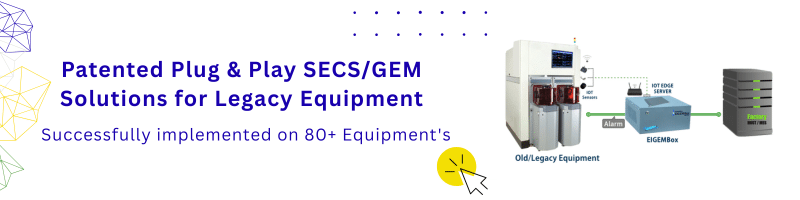
One of the most practical methods for implementing SECS/GEM on Non-GEM Tools is deploying a gateway or middleware platform. These solutions act as communication bridges between legacy equipment and host automation systems.
Gateway-based SECS/GEM Integration for Legacy Tools collects equipment signals and translates them into standardized SECS/GEM messages. This approach allows manufacturers to Enable SECS/GEM on Legacy Equipment without modifying the original machine controller. Middleware solutions also support advanced SECS/GEM Data Collection Solutions, enabling automated monitoring of equipment parameters, alarms, and process events.
These platforms often include configurable mapping tools that simplify SECS/GEM Interface Implementation, ensuring compatibility with factory MES and automation systems. Gateway-based Semiconductor Equipment SECS/GEM Upgrade strategies are cost-effective and minimize operational disruptions during deployment.
Strategy 2: Controller-Level Integration and Software Customization
In some cases, legacy equipment provides programmable controllers or communication interfaces that support custom software integration. Implementing controller-level modifications enables deeper SECS/GEM Legacy Equipment Integration and supports enhanced automation capabilities.
Custom software modules can facilitate SECS/GEM Equipment Communication by extracting machine data directly from PLCs or embedded controllers. This strategy supports more comprehensive SECS/GEM Factory Automation, enabling advanced features such as recipe download, remote start/stop commands, and automated parameter adjustments.
While this method requires engineering expertise, it provides long-term benefits by ensuring full GEM Compliance for Semiconductor Tools. Customized integration also supports scalable SECS/GEM Automation Solutions, allowing equipment to evolve alongside factory automation requirements.
Strategy 3: Sensor-Based Data Acquisition for Legacy Tools
Some older machines lack communication ports or digital control systems. In such cases, manufacturers can implement sensor-based monitoring as part of their Non-GEM Equipment SECS/GEM Enablement strategy.
Industrial sensors can capture operational parameters such as temperature, pressure, vibration, and equipment status signals. These data points are processed using SECS/GEM Data Collection Solutions, enabling communication with factory host systems through standardized SECS/GEM messages.
Sensor-based SECS/GEM Retrofit Solutions provide a non-invasive method to Enable SECS/GEM on Legacy Equipment, reducing implementation risks. This approach also enhances predictive maintenance and equipment monitoring, contributing to improved production efficiency and reduced downtime. It remains a popular strategy for organizations pursuing SECS/GEM Implementation for Older Tools without altering equipment hardware.
Strategy 4: Leveraging SECS/GEM SDK and Integration Frameworks
Another effective method for implementing SECS/GEM on Non-GEM Tools involves using specialized SECS/GEM SDKs or development frameworks. These tools simplify the creation of communication interfaces and accelerate SECS/GEM Integration for Legacy Tools.
SDK-based solutions support faster SECS/GEM Interface Implementation by providing prebuilt libraries, communication templates, and configuration utilities. They enable manufacturers to Enable SECS/GEM on Legacy Equipment while ensuring compatibility with the SECS/GEM Communication Protocol.
SDK-driven SECS/GEM Automation Solutions also support flexible system customization, enabling integration with MES, SCADA, and cloud analytics platforms. These frameworks streamline Semiconductor Equipment Integration, reducing engineering complexity and deployment time.
Strategy 5: Gradual Migration and Hybrid Integration Approach
Implementing SECS/GEM Legacy Equipment Integration does not always require a complete transformation of factory infrastructure. Many semiconductor facilities adopt phased or hybrid deployment strategies to manage costs and operational risks.
A gradual Semiconductor Equipment SECS/GEM Upgrade plan allows manufacturers to prioritize critical production tools while maintaining ongoing operations. Hybrid integration models combine gateway solutions, sensor-based monitoring, and controller-level modifications to achieve comprehensive Non-GEM Equipment SECS/GEM Enablement.
This approach ensures consistent SECS/GEM Host Equipment Communication across production lines while supporting scalable factory automation. Hybrid deployment strategies also improve overall SECS/GEM Factory Automation, enabling manufacturers to transition smoothly toward fully automated manufacturing environments.
Key Challenges in Enabling SECS/GEM on Non-GEM Tools
While implementing SECS/GEM on Non-GEM Tools offers numerous advantages, manufacturers must address several challenges during deployment. Legacy equipment often lacks standardized communication protocols, making SECS/GEM Interface Implementation technically complex.
Compatibility issues, data mapping difficulties, and hardware limitations can impact SECS/GEM Equipment Communication performance. Additionally, ensuring GEM Compliance for Semiconductor Tools requires careful validation and testing to confirm that equipment supports mandatory SECS/GEM functions.
Successful SECS/GEM Retrofit Solutions require collaboration between automation engineers, equipment vendors, and integration specialists. Organizations must also invest in training and system validation to ensure reliable SECS/GEM Automation Solutions deployment.
Business Benefits of SECS/GEM Enablement
Investing in SECS/GEM Integration for Legacy Tools delivers significant operational and financial benefits. Real-time SECS/GEM Data Collection Solutions improve production visibility and enable faster decision-making. Automated SECS/GEM Host Equipment Communication enhances scheduling, fault detection, and process control.
By implementing SECS/GEM Implementation for Older Tools, semiconductor manufacturers can extend equipment lifespan while achieving modern automation standards. Comprehensive Semiconductor Equipment SECS/GEM Upgrade strategies support improved productivity, reduced downtime, and enhanced yield performance.
Additionally, effective SECS/GEM Legacy Equipment Integration strengthens overall SECS/GEM Factory Automation, helping organizations remain competitive in evolving semiconductor markets.
Conclusion
As semiconductor manufacturing continues to advance toward fully automated and data-driven operations, enabling SECS/GEM on Non-GEM Tools has become a strategic priority. Legacy equipment remains valuable but must be integrated into modern automation ecosystems to support operational efficiency and production scalability.
By adopting proven strategies such as gateway-based SECS/GEM Retrofit Solutions, controller-level integration, sensor-based monitoring, and SDK-driven SECS/GEM Automation Solutions, manufacturers can successfully Enable SECS/GEM on Legacy Equipment. These approaches ensure seamless SECS/GEM Equipment Communication, improved SECS/GEM Host Equipment Communication, and reliable Semiconductor Equipment Integration.
A well-planned SECS/GEM Implementation for Older Tools not only ensures GEM Compliance for Semiconductor Tools but also enables organizations to maximize equipment value and production performance. Ultimately, comprehensive SECS/GEM Legacy Equipment Integration supports scalable automation and prepares semiconductor facilities for the future of smart manufacturing.
Frequently Asked Questions (FAQs)
SECS/GEM on Non-GEM Tools refers to enabling legacy semiconductor manufacturing equipment that does not natively support the SECS/GEM Communication Protocol to communicate with factory host systems such as MES or SCADA. This process allows older machines to participate in automated production environments and supports real-time data exchange.
To Enable SECS/GEM on Legacy Equipment is important because many semiconductor factories rely on older tools that still perform critical manufacturing processes. Integrating these tools improves production visibility, supports automation, enhances equipment monitoring, and reduces manual intervention. It also extends equipment lifespan while enabling smart factory adoption.
Several strategies are used for SECS/GEM Integration for Legacy Tools, including:
Gateway or middleware solutions
Controller-level software integration
Sensor-based monitoring and data acquisition
SDK-based SECS/GEM interface development
Hybrid integration approaches
These methods help achieve Non-GEM Equipment SECS/GEM Enablement efficiently and cost-effectively.
SECS/GEM Retrofit Solutions are technologies and tools designed to upgrade older semiconductor equipment with SECS/GEM communication capabilities. These solutions often include communication gateways, software adapters, and sensor-based monitoring systems that help modernize legacy machines without replacing them.
SECS/GEM Legacy Equipment Integration enhances SECS/GEM Factory Automation by allowing older machines to communicate with MES, SCADA, and other factory control systems. This integration improves production tracking, process control, alarm monitoring, and recipe management, leading to improved operational efficiency.
A Semiconductor Equipment SECS/GEM Upgrade allows manufacturing tools to exchange real-time production data, enabling predictive maintenance, process optimization, and automated workflow management. This upgrade supports Industry 4.0 initiatives and improves overall production efficiency.
