
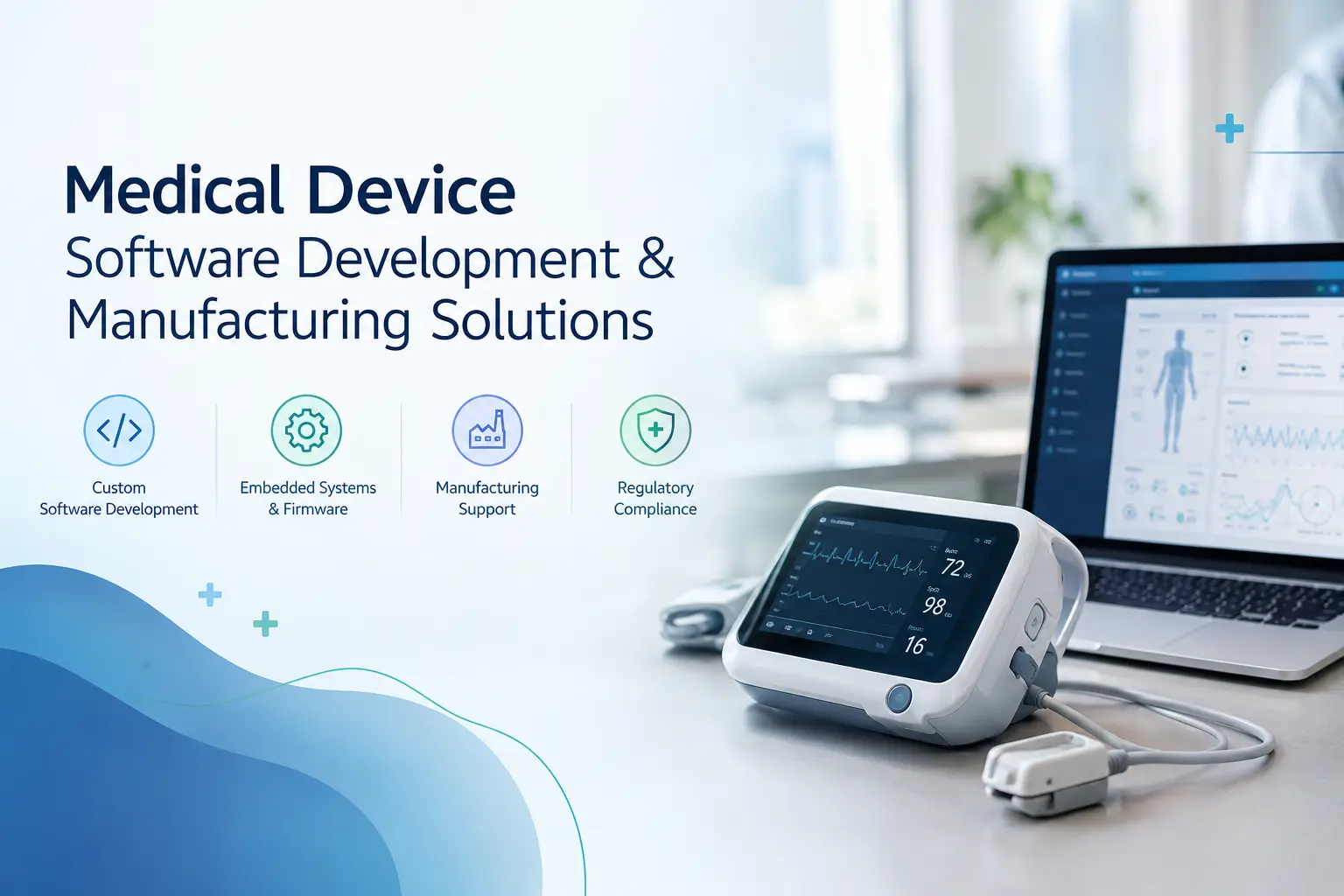
The medical device industry runs on precision. Every product that leaves a manufacturing floor — from infusion pumps to diagnostic imaging systems — must meet exacting standards for safety, traceability, and quality. Behind that precision sits a layer of technology that rarely gets the spotlight: software. Medical device software development is what connects machines, collects production data, automates repetitive processes, and gives manufacturers the visibility they need to build reliable, compliant devices at scale.
As MedTech companies expand production and face tighter regulatory scrutiny, the demand for smarter manufacturing software is growing fast. This guide breaks down what medical device software development actually involves, why it matters, the biggest manufacturing challenges it solves, and what to look for in a development partner.
What Is Medical Device Software Development?
Medical device software development refers to the design, engineering, and integration of software systems that support the manufacturing, monitoring, and connectivity of medical devices and the equipment used to produce them. This isn’t limited to the embedded software running inside a device itself — it also covers the manufacturing execution systems, data acquisition tools, automation platforms, and integration layers that connect production equipment on the factory floor.
In practice, this software helps manufacturers:
- Connect machines and production equipment to central systems
- Collect and analyze real-time production data
- Automate manual, error-prone processes
- Maintain full traceability across materials, lots, and finished products
- Integrate legacy equipment with modern digital infrastructure
- Support the documentation and quality processes required for regulatory compliance
Because medical devices are subject to strict oversight from bodies like the FDA (in the United States) and under the EU Medical Device Regulation (MDR) in Europe, the software supporting their manufacturing must be built with reliability, auditability, and data integrity as core requirements — not afterthoughts.
Why Software Is Critical in Medical Device Manufacturing
Manufacturing a medical device is far more complex than assembling components. Every stage of production needs to be monitored, documented, and verifiable. Software is what makes that level of control possible at scale. Here’s where it plays the biggest role:
| Capability | Description |
|---|---|
| Equipment Connectivity | Linking machines, sensors, and production tools so they can communicate data in real time rather than operating as isolated units. |
| Production Automation | Reducing manual intervention in repetitive tasks to lower the risk of human error and improve throughput. |
| Data Collection | Capturing detailed information from every stage of production for analysis, reporting, and continuous process improvement. |
| Traceability | Maintaining a verifiable record of materials, components, and process steps associated with every finished device for recalls and audits. |
| Process Monitoring | Providing real-time visibility into production status, bottlenecks, and equipment health. |
| Quality Management | Identifying deviations early and helping ensure each unit meets defined specifications before moving to the next stage. |
| System Integration | Connecting shop-floor equipment with higher-level systems such as ERP and MES so data flows without manual re-entry. |
| Operational Visibility | Providing leadership with a clear, real-time view of manufacturing performance across lines, shifts, and facilities. |
Without dedicated software addressing these areas, manufacturers are left relying on manual logs, disconnected systems, and reactive problem-solving — all of which slow down production and increase compliance risk.
Key Medical Device Software Development Solutions
Medical device manufacturers typically need a combination of the following software solutions to run efficient, compliant operations:
- Equipment and machine connectivity — Software that links production equipment, regardless of age or manufacturer, into a unified data network.
- Manufacturing software integration — Connecting shop-floor systems with MES, ERP, and quality management platforms.
- Industrial protocol integration — Enabling machines that speak different communication protocols to exchange data reliably.
- Data acquisition and monitoring — Capturing real-time metrics from equipment for dashboards, alerts, and reporting.
- Automation software — Reducing manual steps in production, testing, and packaging workflows.
- MES and factory-system integration — Linking execution-level data with broader manufacturing intelligence platforms.
- Legacy equipment integration — Bringing older machines — which are common on medical device production lines — into modern digital workflows without a costly hardware overhaul.
- Custom software development — Purpose-built applications designed around a manufacturer’s specific equipment, workflows, and compliance needs.
These solutions rarely work in isolation. The most effective manufacturing environments combine several of them into one connected ecosystem, where data moves seamlessly from the machine level up to management dashboards.
Medical Device Manufacturing Software Challenges
Most medical device manufacturers face a familiar set of operational pain points. The table below maps common challenges to the software solutions that address them.
| Manufacturing Challenge | Software Solution |
|---|---|
| Limited production visibility | Real-time production monitoring |
| Manual data collection | Automated equipment data collection |
| Difficult traceability | Lot, material, and product genealogy tracking |
| Quality inconsistencies | Integrated quality management |
| Equipment downtime | Equipment status and downtime tracking |
| Data scattered across systems | Centralized manufacturing information |
| Legacy equipment | Equipment connectivity and integration |
| Complex equipment communication | Protocol-based software integration |
Solving these challenges isn’t just about efficiency — it directly affects a manufacturer’s ability to pass audits, respond quickly to quality issues, and scale production without scaling risk.
Equipment Connectivity in Medical Device Manufacturing
Modern medical device production floors often include a mix of equipment — some newly installed, some running for a decade or more. Equipment connectivity software bridges this gap, allowing machines of different ages and communication standards to share data through a common platform.
This connectivity supports three core needs: real-time communication between machines and central systems, automated data collection without manual entry, and the kind of automation that reduces bottlenecks across a production line. For manufacturers running multiple lines or facilities, connected equipment also means centralized visibility — a single view of performance rather than fragmented, line-by-line reporting.
SECS/GEM and Equipment Integration
SECS/GEM (SEMI Equipment Communications Standard / Generic Equipment Model) is a communication protocol most commonly associated with semiconductor manufacturing, where it’s used to standardize how equipment communicates with host systems. While not every medical device manufacturer will need SECS/GEM specifically, the underlying expertise — building reliable, standards-based communication between equipment and manufacturing systems — is directly relevant to medical device production.
Manufacturers dealing with complex, multi-vendor equipment environments benefit from partners who understand protocol-based integration, whether that means SECS/GEM, OPC UA, Modbus, or another industrial communication standard. The goal is the same regardless of protocol: getting equipment to talk to your systems in a consistent, dependable way.
How eInnoSys Supports Medical Device Manufacturers
Medical device manufacturers need a software partner who understands both the technical demands of factory-floor integration and the regulatory realities of the MedTech industry. eInnoSys works with manufacturers to build that bridge through:
- Custom equipment software tailored to specific production environments
- Equipment connectivity across new and legacy machines
- Automation software that reduces manual process steps
- Industrial protocol integration, including SECS/GEM implementations where applicable
- Manufacturing-system integration connecting shop-floor data with MES and ERP platforms
- Legacy equipment integration using tools like EIGEMBox to connect older machines without costly replacements
- Data acquisition for real-time monitoring and reporting
- Software engineering services built around each manufacturer’s unique workflow
Whether a manufacturer is looking to connect a single production line or unify data across multiple facilities, this kind of tailored, standards-driven approach helps reduce downtime, improve traceability, and support long-term compliance goals.
Conclusion
Software has become a foundational part of medical device manufacturing — not a supporting feature. From equipment connectivity and automation to traceability and quality management, the right software infrastructure gives manufacturers the visibility and control they need to produce safe, compliant devices efficiently and at scale. As production environments grow more complex, working with an experienced partner matters more than ever.
eInnoSys brings deep expertise in equipment connectivity, industrial protocol integration, and custom manufacturing software, helping medical device manufacturers modernize their production floors without disrupting what already works.


