
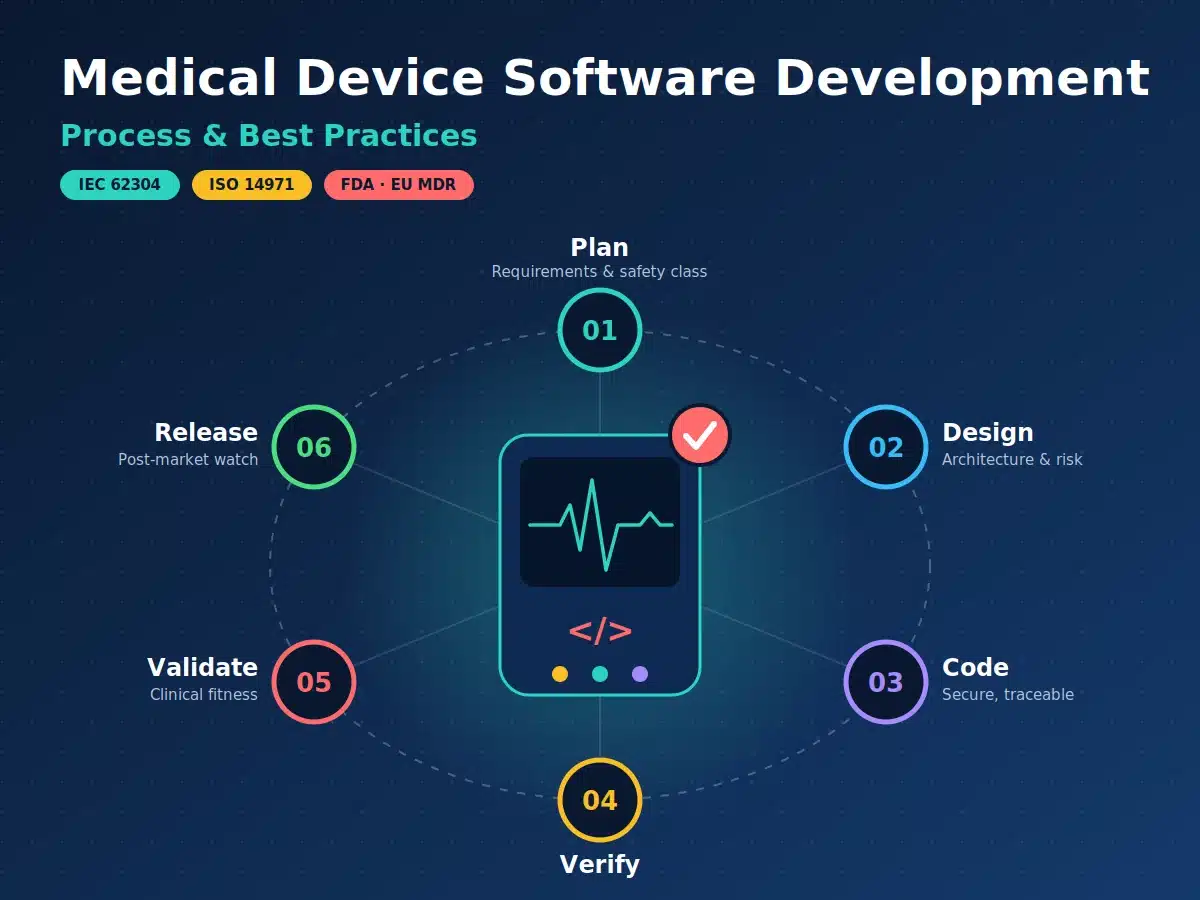
Medical device software development affects every stage of production. Software runs machines, tracks parts, and records each step. It also proves compliance during audits.
Weak software causes delays, rework, and regulatory risk. Strong software does the opposite. It improves quality and keeps production moving.
This guide explains the process, key requirements, and best practices. It also shows how MES and equipment integration support medical device manufacturing.
What Is Medical Device Software Development?
Medical device software development is the planned creation of software for devices and for the factories that build them. It covers two areas. The first is software inside the device. The second is software that supports manufacturing.
This article focuses on the second area. Manufacturing software connects machines, collects data, and controls workflows. As a result, teams gain full visibility across the shop floor.
Medical device software must also meet strict regulations. Standards such as IEC 62304, ISO 13485, and FDA 21 CFR Part 11 guide the work. Therefore, every decision needs documentation and evidence.
The Medical Device Software Development Process
A structured process reduces risk and rework. Most teams follow eight steps.
Requirements:-
Start by defining user needs, regulatory rules, and system limits. Clear requirements prevent costly changes later. Also, link each requirement to a risk so the team knows what matters most.
Design:-
Next, design the architecture, data flow, and interfaces. Choose standard protocols for equipment communication. Moreover, plan for future growth from the start.
Development:-
Developers then write code that follows secure coding rules. Code reviews and version control keep quality high. In addition, small releases make problems easier to find.
Integration:-
After that, connect the software with machines, databases, and enterprise systems. Integration often exposes hidden gaps. Therefore, test connections early.
Testing:-
Testing covers unit, system, and performance checks. Teams should also test failure cases. Each result must be recorded.
Validation:-
Validation proves the software meets user needs in real conditions. Installation, operational, and performance qualification are common steps. Regulators expect this evidence.
Deployment:-
Roll out the software in stages. Train operators and supervisors before go-live. Additionally, prepare a rollback plan in case of issues.
Maintenance:-
Software needs updates, patches, and change control. Every change must be assessed, tested, and documented. This keeps the validated state intact.
Key Software Requirements
| Requirement | Description |
|---|---|
| Traceability | Links each unit to its materials, machines, processes, and operators. |
| Data Integrity | Maintains accurate, complete, consistent, and time-stamped records. |
| Security | Protects manufacturing data and systems from unauthorized access and cyber threats. |
| Scalability | Supports additional production lines, equipment, and manufacturing sites without major redesign. |
| Interoperability | Enables seamless data exchange with ERP, QMS, MES, and manufacturing equipment. |
These requirements shape every design choice. For example, weak traceability makes recalls slower and more expensive.
Medical Device Manufacturing Software Solutions
Medical device manufacturing software solutions bring production data into one place. They monitor lines in real time and collect machine data automatically. They also manage workflows and alert teams to problems.
As a result, operators spend less time on paperwork. Managers see output, downtime, and quality trends instantly. Moreover, medical device production software reduces manual entry errors, which supports data integrity.
Role of MES in Medical Device Manufacturing
A medical device manufacturing execution system (MES) sits between the shop floor and business systems. MES for medical device manufacturing controls and records what happens during production.
Medical device MES software typically provides:
- Production tracking across lines and work orders
- Quality checks and nonconformance handling
- Genealogy records for each device and component
- Digital work instructions for operators
Together, these features create a complete electronic device history record. Consequently, audits become faster and recalls become more targeted.
Medical Device Equipment Integration
Medical device equipment integration connects machines with factory systems. Without it, data stays trapped in individual tools. Operators then copy values by hand, which invites errors.
Standardized communication solves this problem. SEMI standards such as SECS/GEM let equipment share status, alarms, and process data in a common format. Furthermore, standard interfaces shorten setup time for new machines.
Integration also enables medical device manufacturing automation. Systems can send recipes to machines, verify settings, and stop a process when values drift. Thus, automation improves both speed and consistency.
Best Practices for Medical Device Software Development
- Use risk-based development. Focus effort on functions that affect product quality and patient safety.
- Validate early and often. Plan validation from the first requirement, not the last week.
- Build in cybersecurity. Apply access control, encryption, and regular patching.
- Document everything. Keep requirements, tests, and approvals traceable.
- Test thoroughly. Combine automated and manual tests.
- Plan for scalability. Choose modular designs and open standards.
Common Challenges
Even strong teams face obstacles:
- Legacy equipment: Older machines may lack modern interfaces.
- Disconnected systems: Separate tools create gaps between production and quality.
- Data silos: Isolated data hides trends and slows decisions.
- Compliance pressure: Rules change, and documentation demands keep growing.
- Integration complexity: Many vendors and protocols complicate projects.
However, a proven integration approach and standard protocols can solve most of these issues.
How eInnoSys Supports Medical Device Manufacturing
As a medical device manufacturing software company, eInnoSys helps manufacturers connect equipment and systems. Its Medical Devices industry solutions support traceability, automation, and compliance.
Three products form the core:
- EIGEMEquipment adds SECS/GEM communication to machines, including legacy equipment.
- EIGEMHost manages equipment communication from the host side.
- EIGEMLink links equipment to the host for reliable data exchange.
Together, they give plants a clear path from isolated machines to connected production.
Conclusion
Medical device software development demands structure, validation, and attention to detail. A clear process, strong requirements, and proven best practices reduce risk. In addition, MES and equipment integration turn raw machine data into useful insight.
Manufacturers that invest in integrated, scalable software gain better quality, faster audits, and lower costs. With deep expertise in equipment connectivity, eInnoSys helps medical device manufacturers build that foundation. Contact eInnoSys to start connecting your production floor today.


