
Introduction
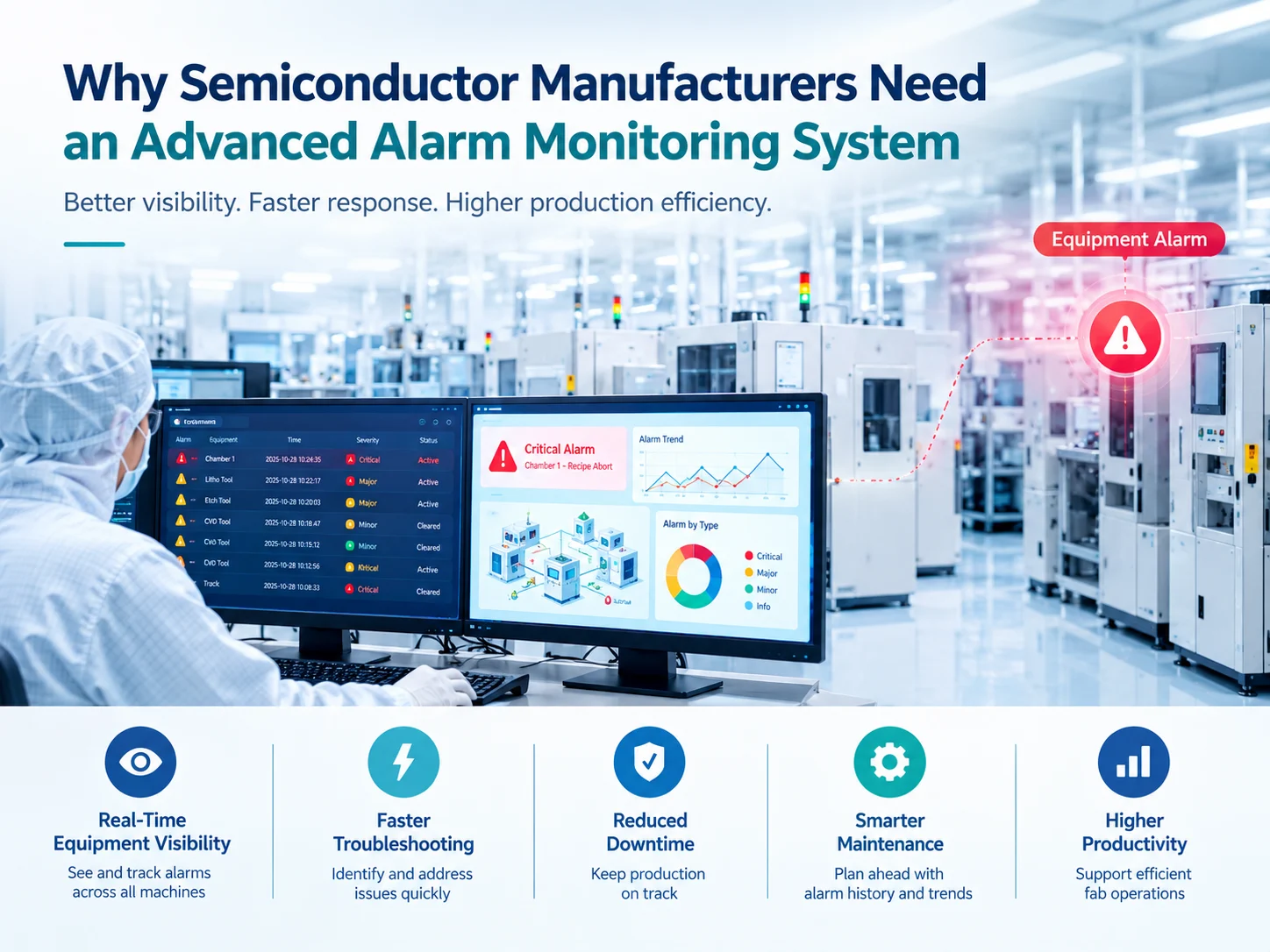
A semiconductor fab runs hundreds of tools through long, tightly controlled process flows. Every tool raises alarms for temperature deviations, vacuum faults, interlock trips, and communication errors. Some are informational. Others need action within minutes.
In many factories, those alarms sit on separate tool screens, in local logs, or in a stream of messages no one can fully follow. An advanced alarm monitoring system collects them in one place, shows what matters, and keeps a record. This article explains why semiconductor manufacturers need one, how it works, and how SECS/GEM makes it possible.
Why Alarm Monitoring Is Important in Semiconductor Manufacturing
An alarm is often the first sign that a tool is drifting from normal. Whether anyone sees it in time decides whether the result is a short stop or a long one.
Prevent Unexpected Equipment Downtime
A rising chamber pressure alarm may be ignored on one shift and repeat on the next. Real-time semiconductor alarm monitoring brings repeated or escalating alarms to attention while there is still time to plan the intervention.
Identify Equipment Abnormalities Faster
Engineers cannot watch every tool screen. A central view lets them see which tool raised which alarm and when, without walking the floor.
Maintain Consistent Production Operations
Unresolved alarms can lead to holds, reruns, or misprocessed lots. Timely visibility supports steadier operation across shifts.
Common Challenges of Traditional Equipment Alarm Monitoring
Scattered Equipment Alarm Information
Tools from different vendors store alarms in different formats and places. Comparing the same alarm across similar tools means collecting data by hand.
Repeated and Unprioritized Alarm Notifications
When every notification looks the same, a critical vacuum fault can sit between routine warnings. Operators learn to ignore the noise.
Delayed Troubleshooting and Manual Tracking
Spreadsheets and paper logs make it hard to see recurring issues. Engineers spend time reconstructing what happened instead of fixing it.
Traditional vs. Advanced Alarm Monitoring
| Area | Traditional Alarm Monitoring | Advanced Alarm Monitoring System |
|---|---|---|
| Alarm Visibility | Alarms are displayed on individual equipment screens. | Provides centralized alarm visibility across multiple machines. |
| Alarm Prioritization | Operators manually identify important alarms. | Classifies alarms by type and priority. |
| Alarm History | Records are maintained in local logs, paper records, or spreadsheets. | Maintains searchable and centralized alarm history. |
| Troubleshooting | Requires manual investigation and information lookup. | Provides faster access to alarm details and historical context. |
| Multi-Machine Comparison | Comparing alarms across similar equipment is difficult. | Enables alarm comparison across multiple machines. |
How an Advanced Alarm Monitoring System Works
Real-Time Equipment Alarm Collection
The system receives alarm events from equipment as they occur, typically through SECS/GEM, so no one has to poll tool screens.
Centralized Alarm Monitoring Dashboard
All alarms appear in one dashboard, so engineers can see tool status and alarm activity across the line.
Alarm History and Event Tracking
Every alarm is logged with its time and source. Recurring alarms become visible, which supports root-cause work and maintenance planning.
Alarm Classification and Prioritization
Alarms can be grouped by type or severity so teams respond to critical events first.
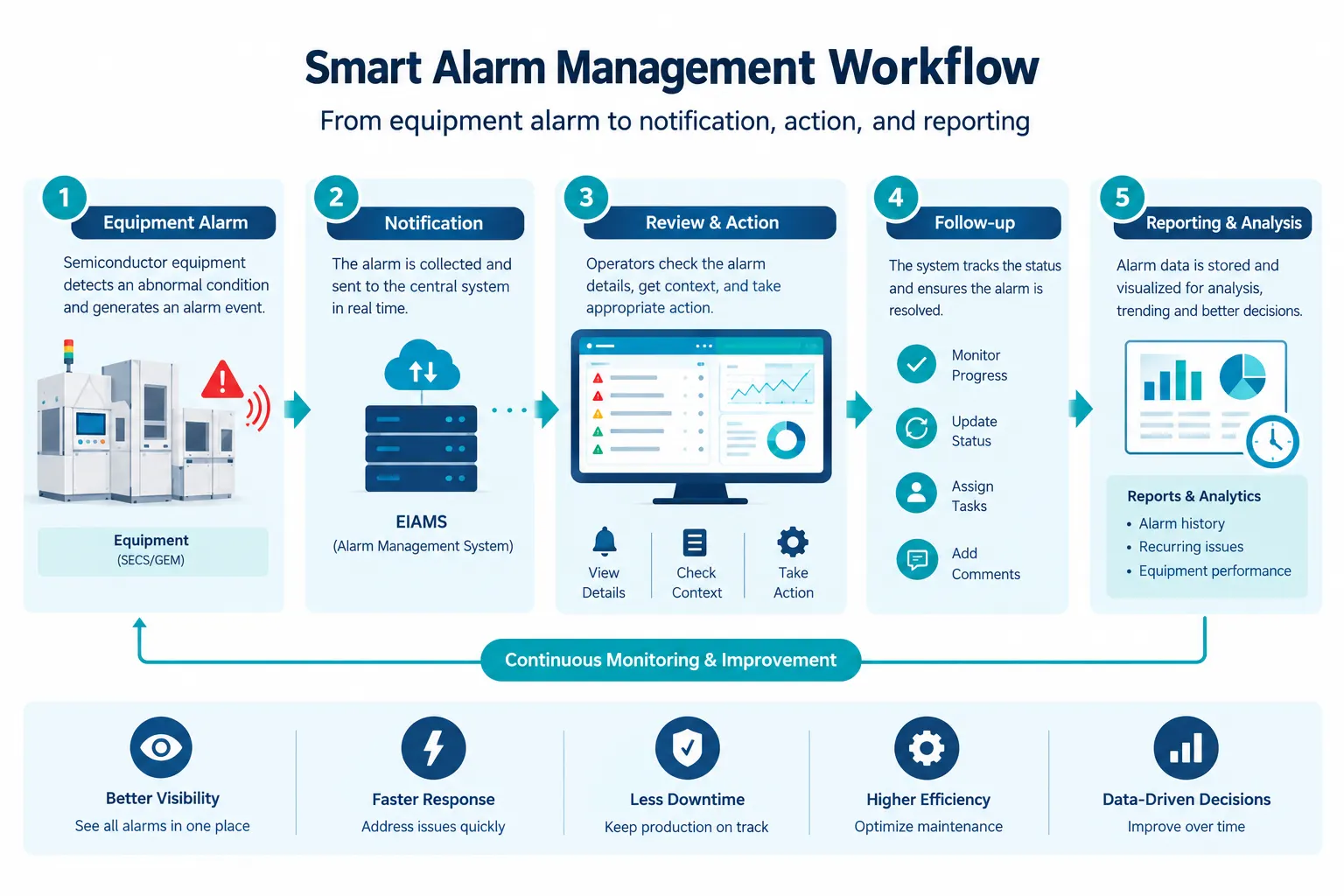
How an advanced alarm monitoring workflow operates:
- Equipment raises an alarm.
- The alarm is sent to the monitoring system, typically over SECS/GEM.
- The system records it and shows it on the central dashboard.
- The alarm is classified and prioritized.
- The responsible engineer or operator is notified.
- Predefined actions are taken where configured.
- The event is stored for history, comparison, and reporting.
Key Benefits of Advanced Alarm Monitoring Software
- Real-time equipment alarm visibility: one view of alarms as they happen.
- Faster fault identification and troubleshooting: engineers start with the alarm, time, and tool already in front of them.
- Reduced unplanned equipment downtime: earlier attention to developing problems.
- Better alarm prioritization: critical events are not buried.
- Improved maintenance planning: alarm history shows which issues repeat.
- Centralized monitoring across multiple machines: one system instead of many tool screens.
| Key Capability | How It Works | Manufacturing Benefit |
|---|---|---|
| Real-Time Alarm Collection | Collects alarm events from equipment as they occur. | Provides immediate visibility into equipment abnormalities. |
| Centralized Alarm Dashboard | Displays alarm information from multiple machines in one interface. | Reduces the need to check individual equipment screens. |
| Alarm History Tracking | Records alarm details, timestamps, and equipment sources. | Supports root-cause analysis and maintenance planning. |
| Alarm Classification and Prioritization | Groups alarms by type, category, or severity. | Helps operators identify and address critical alarms first. |
| Multi-Machine Alarm Comparison | Compares alarm patterns across similar equipment. | Makes recurring issues and equipment-related trends easier to identify. |
How SECS/GEM Enables Semiconductor Equipment Alarm Monitoring
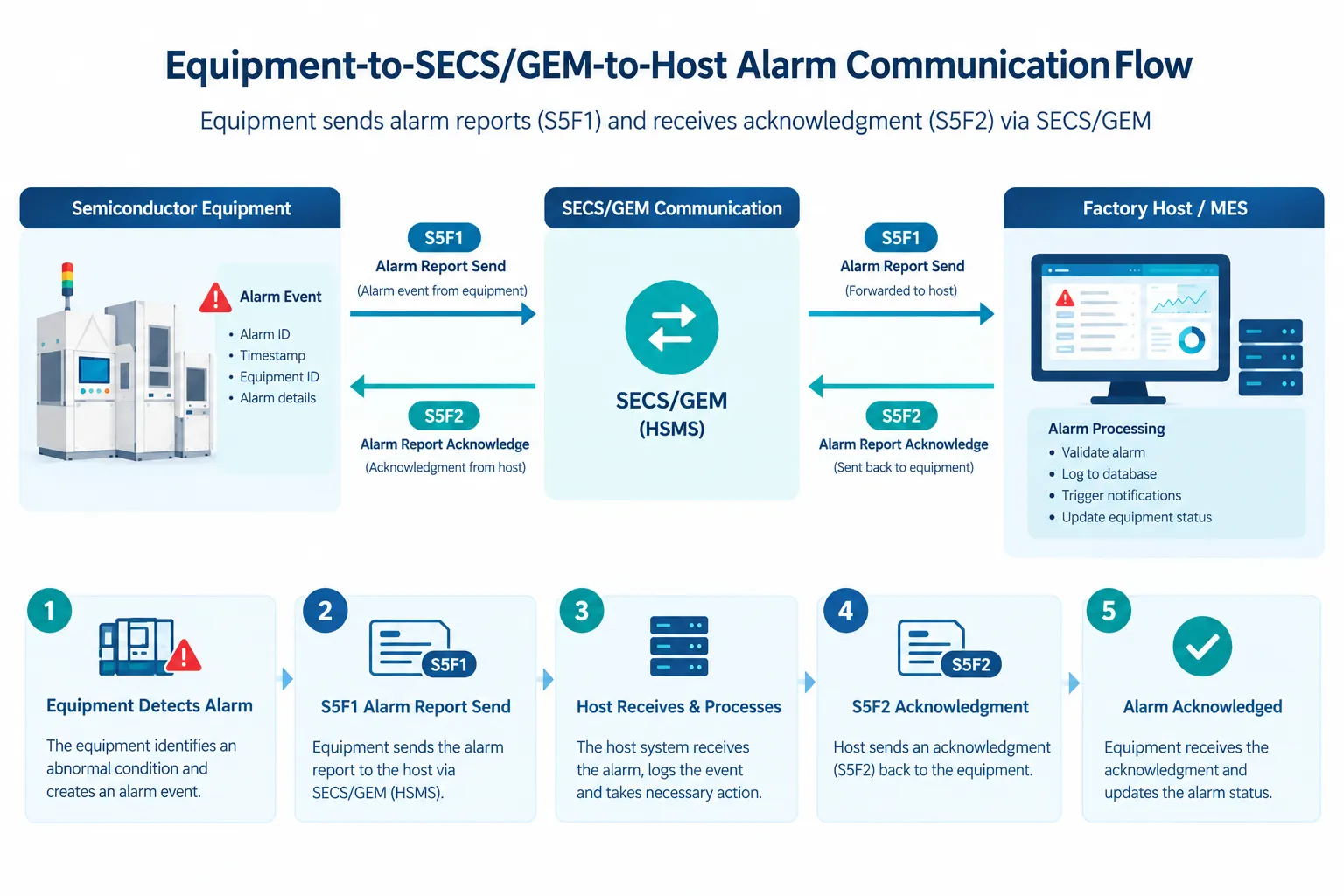
SECS/GEM is the standard communication interface between semiconductor equipment and a factory host system. SECS-II defines the messages, and GEM defines how equipment should behave, including alarm reporting. When a tool supports it, the host receives alarms in a consistent format instead of through vendor-specific screens.
Two messages matter most here:
- S5F1 – Alarm Report Send: the equipment sends this when an alarm is set or cleared. It carries an alarm ID, an alarm code, and alarm text.
- S5F2 – Alarm Report Acknowledge: the host replies to confirm it received the alarm report.
Because every compatible tool reports alarms the same way, a host can collect them centrally and pass them to monitoring and reporting systems.
How eInnoSys Supports Smart Alarm Management
eInnoSys offers EIAMS, an Alarm Management System for semiconductor equipment. Based on the product page, it supports:
- Real-time alarm monitoring
- Tracking alarms and comparing them against other equipment of the same type
- User-defined actions in response to an alarm, such as notifying personnel, stopping or holding processing, or switching equipment to maintenance mode
- Alarm reporting, including Pareto reports, that can combine multiple tools
- Integration with SECS/GEM equipment and existing monitoring environments
Some tools cannot report alarms over SECS/GEM at all. For older equipment, EIGEMBox adds SECS/GEM connectivity to existing machines, so they can feed the same alarm system. Equipment manufacturers who want to build the interface into new tools can look at EIGEMEquipment, the SECS/GEM SDK. A case study describes a fab deployment of eInnoSys alarm management.
Conclusion
An advanced alarm monitoring system gives semiconductor manufacturers one place to see equipment alarms, tell which ones matter, and keep a record. That means better equipment visibility, faster identification of abnormalities, and more informed maintenance decisions. With SECS/GEM as the communication layer, and a connectivity option for older tools, the approach fits both new and legacy fabs.


